

01 / SCOPE
Port-to-Port Coordination
Confirm origin and destination ports, main freight and handling responsibilities on each side.
Discuss port-to-port shippingRAIL FREIGHT
Consider rail on available lanes and coordinate terminal handling, border steps and the onward delivery that completes the journey.
Request a rail freight quoteDEFINE YOUR SHIPPING SCOPE
01 / SCOPE
Confirm origin and destination ports, main freight and handling responsibilities on each side.
Discuss port-to-port shipping02 / SCOPE
Connect supplier collection with warehouse receipt and consolidation before sea freight departure.
Explore cargo consolidation03 / SCOPE
Connect ocean freight with the agreed final delivery leg. Review DDP or DAP and destination import arrangements.
Explore door-to-door shippingOCEAN FREIGHT COSTS
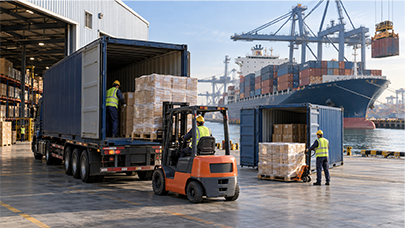
Pickup, warehouse or consolidation handling, origin port services and ocean freight, according to the quote scope.
Discuss quote inclusions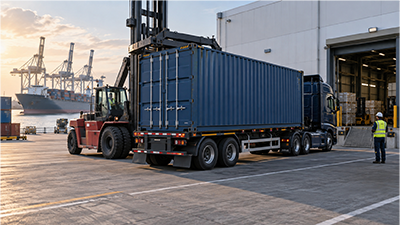
Destination handling, clearance services and final delivery where agreed. Duties and taxes depend on the import and trade arrangements.
Discuss quote inclusions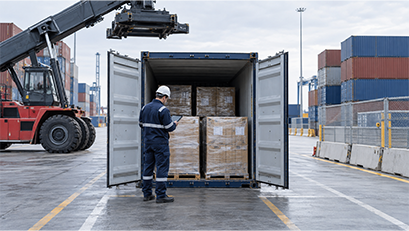
Inspection, extra storage, demurrage, detention or special handling may apply when their triggering conditions occur.
Discuss quote inclusionsTHE OCEAN FREIGHT PROCESS
Confirm the cargo, route, FCL / LCL option, terms and service scope.
Coordinate pickup or handover, consolidation where needed and shipment documents.
Agree on the booking and cut-offs, then follow the handover and sailing milestones.
Coordinate the agreed destination handover, customs arrangements and final delivery.
END-TO-END DELIVERY PLANNING
| Journey stage | What can affect the timeline | What to confirm |
|---|---|---|
| Cargo preparation | Supplier readiness, packing and document completeness | Ready date + cargo handover arrangements |
| Origin operations | Collection, consolidation, cut-offs and port handling | Receiving window + booking cut-offs |
| Rail transport | Rail lanes, terminal handling, border steps and train schedules | Estimated departure + arrival milestones |
| Destination operations | Import checks, document issues and cargo release | Importer + document readiness |
| Final delivery | Delivery appointments, access and unloading requirements | Delivery address + receiving arrangements |
Transit estimates are not guaranteed delivery dates. Allow for route and shipment-specific uncertainty.
BEFORE YOU BOOK
Product description, package count, dimensions, gross weight and total volume. Declare batteries, liquids or regulated goods.
Supplier pickup point, proposed destination port or address, ready date, required arrival date and agreed Incoterm.
Commercial invoice and packing list, plus origin or product documents where required. Review consistency before cargo handover.
Provide applicable safety, certification and handling information. Do not assume regulated, oversized or hazardous cargo is accepted.
CHINA-SIDE COORDINATION
Our own Hong Kong fleet and warehouse support local collection, warehouse handling and onward transport where suitable. Discuss consolidation, storage and cargo handover requirements.
Explore Our Hong Kong Operations
SEA FREIGHT DESTINATION PLANNING

DESTINATION PLANNING
Review preparation and destination requirements.
Explore the Indonesia guide
DESTINATION PLANNING
Review preparation and destination requirements.
Explore the UAE guide
DESTINATION PLANNING
Review preparation and destination requirements.
Explore the Germany guideLEADING BRANDS












BLOG INSIGHTS
FREQUENTLY ASKED QUESTIONS
Plan around your actual cargo, route and delivery needs.
Share the product description, supplier pickup city, destination city or address, package count, packed dimensions, gross weight, cargo ready date and the delivery tasks you want included. Flag any figures that are still estimates.
Yes. Mark dimensions and weights as estimates and ask when the amount will be reconfirmed against final packed cargo.
Compare cargo inputs, transport mode, charging unit, delivery boundary, assumptions, validity and exclusions.
Only the items explicitly included in the written quotation. Confirm duties, taxes, inspections, storage and special handling separately.
Consider cargo size, urgency, route, acceptance requirements and the complete collection-to-delivery cost and timeline.
FCL uses a container for one shipper’s cargo; LCL combines compatible shipments. Compare packed volume, handling and the full service scope.
LET’S PLAN YOUR NEXT SHIPMENT
Tell us what you are moving, where it needs to go and when. We will help identify the service scope and shipping options to discuss.
Not sure which shipping mode to choose? Select “Help me choose” and start with your cargo details.